
Details
Prolonged use of electronic devices and extended periods of sitting in fixed positions can strain the neck and shoulder muscles, often leading to stiffness, pain, and discomfort. This discomfort is not always confined to the affected area. Because muscles work in coordination and nerves run between and around them, tension in one muscle group can influence others. Depending on which muscles or nerves are involved, symptoms such as headaches, ringing in the ears, chest pain, or tingling and numbness in the arms may occur. These signs highlight the importance of addressing what may initially seem like a minor issue. Three muscles in the neck and shoulder region that commonly become tight are the trapezius, sternocleidomastoid (SCM), and rhomboids. This article explores their locations, causes of stiffness, associated discomfort, and simple stretches and self-massage techniques to help relieve tension. The upper trapezius extends from the neck to the shoulders and is particularly prone to tightness due to stress, poor posture, or prolonged desk work. When stiff, it often causes neck and shoulder pain, as well as tension headaches. To stretch this muscle, sit or stand upright and gently tilt your head to one side, bringing your ear toward your shoulder. Allow the opposite shoulder to relax downward. For a deeper stretch, lightly place your hand on your head. To self-massage, gently pinch the muscle between your neck and shoulder, rolling it between your fingers as you would knead dough, while maintaining steady breathing.
Fig.1: Trapezius stretch.
The sternocleidomastoid (SCM) is a long muscle running along the side of the neck. It commonly becomes tense due to forward head posture or jaw clenching. Tightness in the SCM can cause neck pain and, in more severe cases, dizziness and headaches. To stretch it, sit upright, tilt your head slightly backward, then gently turn your head to one side and look upward, keeping your chest open and shoulders relaxed. When massaging this muscle, use a light touch—gently pinch and roll it between your fingers. Care should be taken, as the SCM is sensitive and contains trigger points, which are highly irritable spots.
Fig.2: SCM stretch.
The rhomboids are located between the shoulder blades and often become tight due to rounded shoulders and prolonged sitting. This can lead to upper back and shoulder discomfort. To stretch them, clasp your hands in front of you, extend your arms forward, and gently round your upper back while looking downward. You should feel a stretch between your shoulder blades. For self-massage, place a tennis ball between your upper back and a wall. Lean into it and slowly roll over tight areas, pausing on tender spots for 20 to 30 seconds to help release tension.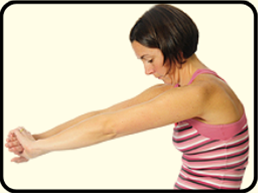
Fig.3: Rhomboid stretch.
In addition to these stretches and self-massage techniques, applying heat—such as through warm showers or heat packs—can further relax muscles. Breathing techniques can also help; exhaling for longer than you inhale promotes muscle relaxation. It is important to take short breaks every 30 to 60 minutes during prolonged sitting. Finally, consistency is key: regular, gentle stretching is more effective than occasional intense sessions, which may lead to increased soreness and discomfort. Contact Us
 Donation
 Volunteer
 Facebook